“When it comes to style, size, strategy and maintainability, I think the bunkers Darius Oliver built at Cape Wickham are the best in Australia.” Andrew Purchase, course builder
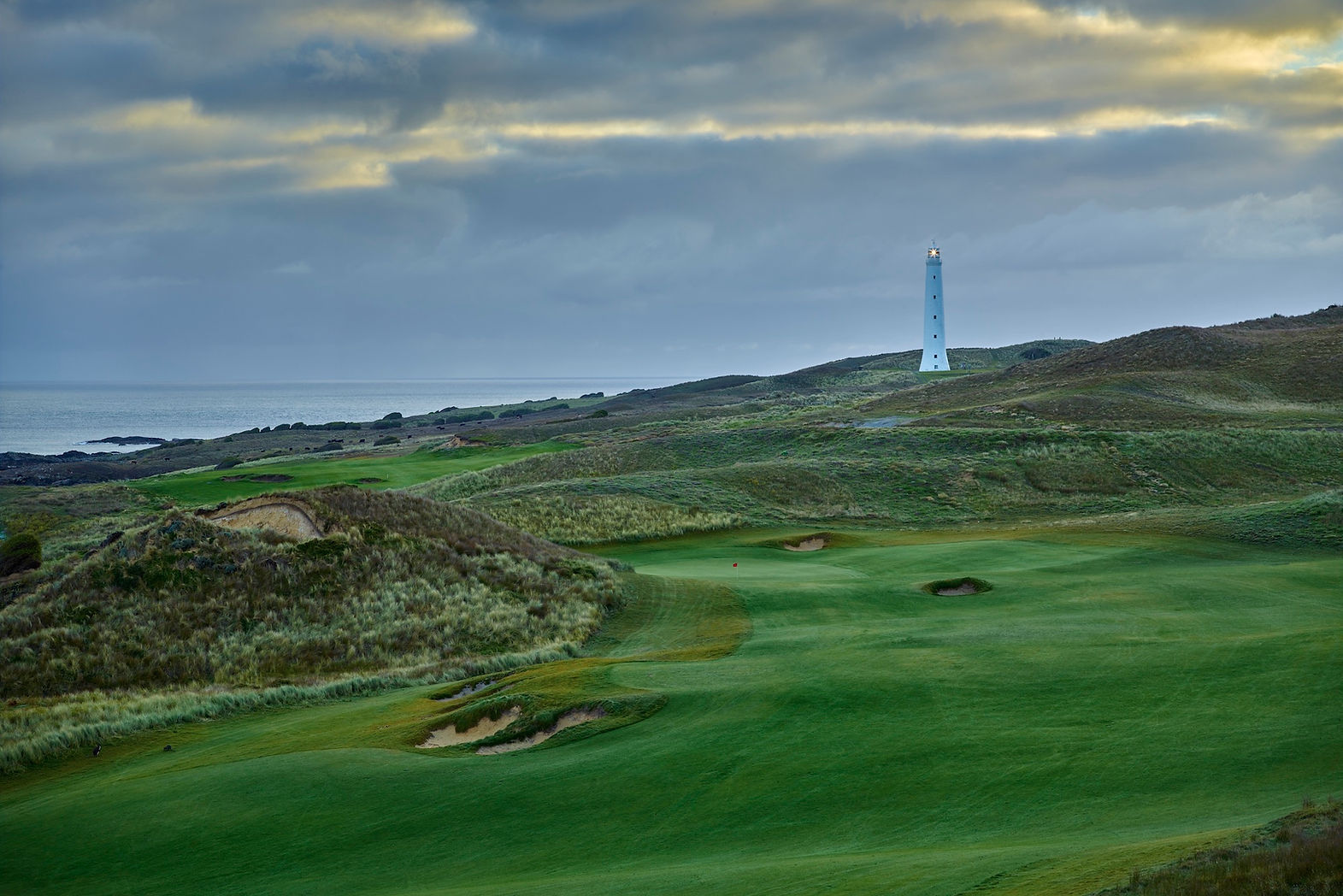
Despite sand being more expensive to maintain than turf, for many designers the easy solution to an apparent design challenge is to build bigger bunkers, or add huge sandy wastelands.
Though I appreciate a beautiful sand hazard as much as the next golfer, I prefer to bunker holes sparingly and am reluctant to add bunkers that serve minimal strategic purpose, or impact playability.
The Farm has no bunkers at all, in part because of the charm of the neighbouring Arrowtown golf course – but moreso, because the holes were already exciting without bunkers. They didn’t need any sand.
Many of the best holes in Australia and New Zealand are sparsely bunkered, including 18 at Cape Wickham, which runs along a beach but has only one maintained bunker.
In New Zealand and Australia, the words Dr. Alister MacKenzie are used by many as part of their marketing. I grew up on the Melbourne Sandbelt, but don’t believe that just saying you are influenced by MacKenzie’s design work necessarily makes it so. One of MacKenzie’s more prominent appointments in Australia, was to advise the Royal Sydney Golf Club to remove hundreds of bunkers. He didn’t like the idea of sand hazards down both sides of the fairway. Remembering, that MacKenzie also designed the original Augusta National layout – with just 22 bunkers.
The lessons I learnt growing up on the Sandbelt relate more to strategic bunkering arrangements, than the appropriateness of using Melbourne bunkers as some sort of style guide. Sandbelt bunkers aren’t always appropriate, as contours and ground conditions are a vital part of their form and function. Copying the Sandbelt look on a clay based site, for example, can cause maintenance issues.
Sandbelt bunker arrangements, however, can always work. The first six holes at Royal Melbourne West are a masterclass in fairway bunkering, and restraint. The same is true of certain par fours and fives at Kingston Heath, Woodlands and Victoria, as well as at places like Royal Adelaide, Paraparaumu Beach and the old links of Scotland and the Heathland courses of England. Those designs influence my work as much as the Sandbelt’s best.
Australia and New Zealand have long been influenced more by American design, than by traditional British design. Given maintenance efficiency is at an all-time premium, there are many courses here that can benefit from bunker reduction – and indeed be improved through bunker reduction.
As much as golf course designers love creating new holes and new courses on great sites, it’s equally rewarding to elevate good courses through sensible, inexpensive modification.

“For decades I have been building courses around the world for many architects and have seen many differing approaches to bunkering.
When it comes to style, size, strategy and maintainability, I think the bunkers that Darius Oliver built at Cape Wickham are the best in Australia.
At Cape Wickham the prevailing winds played a major role in his decision making. The bunkers are beautifully positioned, are subtle and take serious consideration of the maintenance requirements and course maintenance budgets.”
Andrew Purchase, Cape Wickham course builder